


British National Formulary - 1957 - Alternative Edition
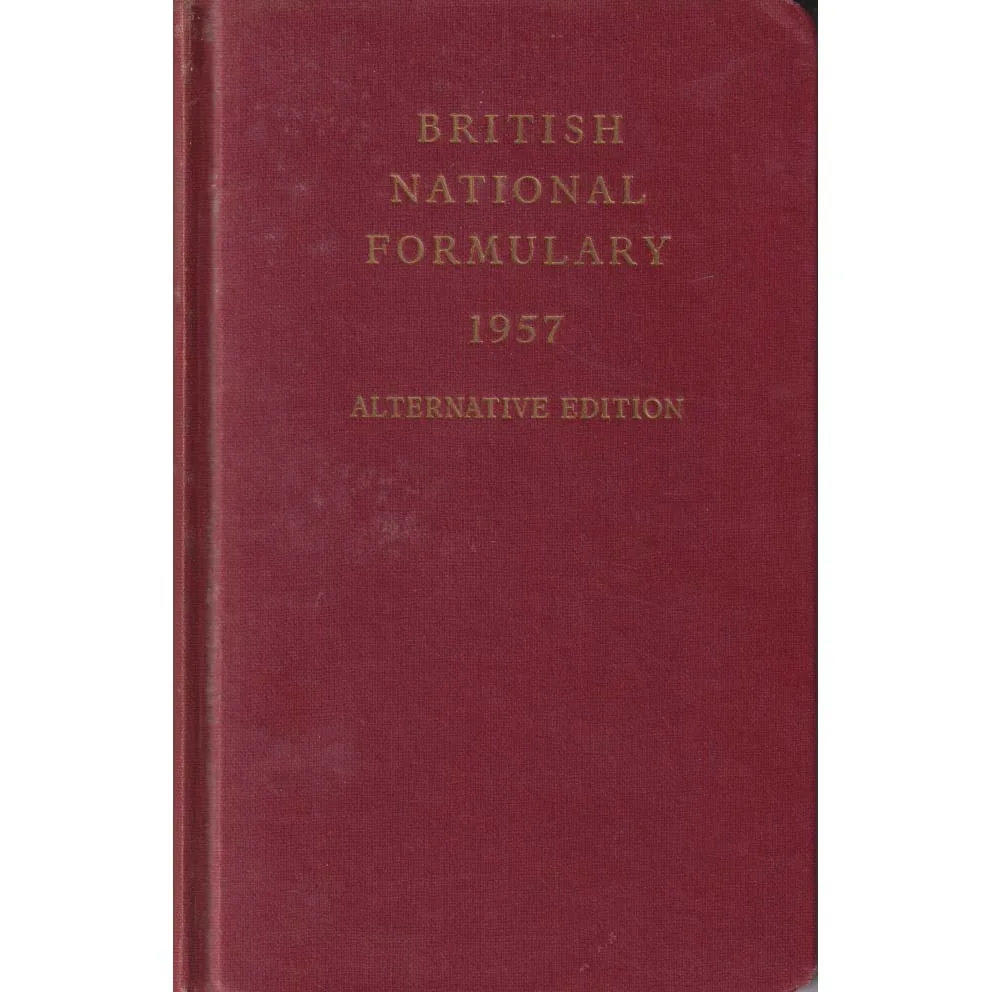
Publisher: British Medical Association
Format: Hardback
ISBN: none
British National Formulary – 1957 – Alternative Edition (1957) by British Medical Association — British Medical Association
ISBN: None (because in 1957 your “tracking code” was a stamp and a stern look)
Condition: Good (as sold by Crappy Old Books, where “Good” means “still ready to prescribe, theoretically”)
Here’s a book that does not so much invite you to read as issue you with instructions. The British National Formulary (1957) is a snapshot of medicine in its clipped, confident, post-war stride—when authority came in hardback logic, dosage tables, and the comforting assumption that if you follow the guidance you will emerge on the other side with your dignity (and possibly your patient) intact.
And yes: it’s the Alternative Edition, which sounds like something you’d find in a vinyl shop—BNF, but make it underground—when in reality it’s simply the era doing what the era loved: producing slightly different official versions for slightly different official needs. The result is the same delicious thing: an uncompromising reference work that treats the human body as a system of problems to be solved with carefully measured substances, ideally administered by someone in a white coat who doesn’t have time for your feelings.
Reading a 1957 formulary now is a particular kind of thrill. Not because you’re going to try anything in it (please don’t), but because it’s like opening a time capsule where the future hasn’t happened yet. The language is brisk. The categories are tidy. The cautions are politely terrifying. And the assumptions—about what’s standard, what’s available, what’s “new”—are quietly fascinating. It’s the NHS era in print: practical, procedural, and designed to keep a complicated national machine running with minimal fuss and maximum clarity.
It’s also weirdly human. Behind the lists and preparations and clinical phrasing is a world of real lives: chronic ailments, acute crises, everyday discomforts, and the relentless need for something that works. The BNF’s job is to be boring and correct, and it does it with admirable seriousness. But that seriousness is exactly what makes it compelling as an artefact: this is what “modern medicine” looked like in 1957, before the decades of later revisions, withdrawals, reclassifications, and oh-wow-we-really-used-that moments.
Let’s be clear: this is not a cosy bedside book unless your idea of relaxation is dosage guidance and contraindications. It is, however, perfect for:
-
collectors of medical ephemera
-
historians of public health and pharmacology
-
prop hunters wanting authentic period detail
-
anyone who enjoys the aesthetics of authority in small print
This copy is listed as Good, sold by Crappy Old Books, which means it’s solid, readable, and still very much a book—likely with the usual honest wear you’d expect from something designed to live on desks, be consulted at speed, and survive the occasional coffee-adjacent incident. It has that reassuring “reference book” feel: built to be opened, used, and not overly precious about it.
Buy it if you like:
-
time-travel through bureaucracy, but with pills
-
social history disguised as practical instructions
-
the charm of mid-century institutional typography
-
books that radiate “do not argue with me, I’m official”
British National Formulary – 1957 (Alternative Edition): a stern, fascinating relic from the era when the answer to most problems was either “rest” or “a measured preparation of something you can’t pronounce.” A wonderfully serious slice of medical history—sold, as ever, with minimal glamour and maximum intrigue by Crappy Old Books.
Keep browsing: See more Academic books Other books by British Medical Association
